
The Trick to Optical Illusions
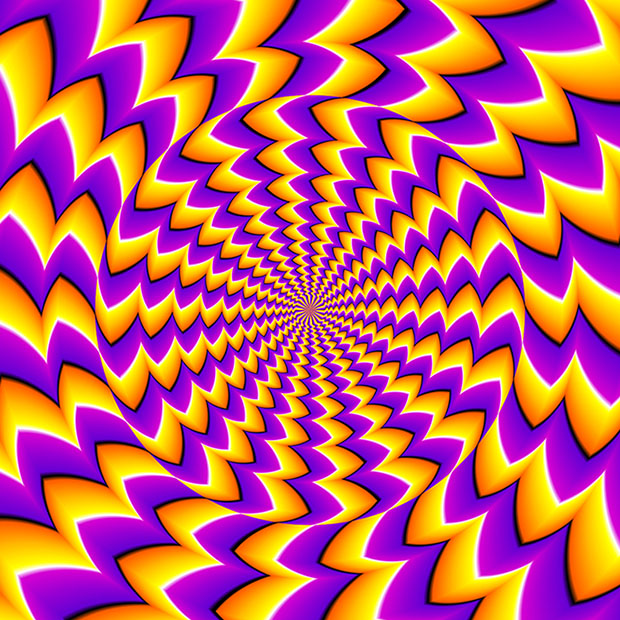
Have you ever seen a still image that appeared to move?
Or looked at two identical objects that appeared to be different sizes? Welcome to the fascinating world of optical illusions, where your eyes and brain team up to play tricks on you. Optical illusions aren’t just entertaining party tricks. They reveal something profound about how we see the world. Understanding them can help us appreciate the incredible complexity of human vision and the shortcuts our brains take to make sense of what we see.
How Your Brain Fills in the Blanks
The secret behind most optical illusions lies in how your brain processes visual information. Your eyes don’t work like cameras, simply recording what’s in front of you. Instead, your brain actively interprets the signals from your eyes, making assumptions based on past experiences and learned patterns.
Consider the famous Müller-Lyer illusion, where two lines of equal length appear different because of the arrows at their ends. Your brain has learned that certain angles and perspectives indicate depth and distance. When you see those arrow configurations, your visual system automatically applies rules about perspective, making one line seem longer than the other.
This process happens in milliseconds, completely outside your conscious awareness. Your brain is constantly predicting what you’re seeing before all the information arrives, helping you react quickly to your environment. Most of the time, these predictions are helpful. But optical illusions expose the moments when these mental shortcuts lead us astray.
The Role of Context and Contrast
Many optical illusions exploit how your eyes perceive contrast and context. The Hermann grid illusion demonstrates this perfectly. When you look at a white grid on a black background, gray spots seem to appear at the intersections. These spots aren’t really there. They’re created by the way your retinal cells respond to the contrast between the white lines and black squares.
Similarly, the same gray square can appear lighter or darker depending on the background surrounding it. Your brain doesn’t judge colors in isolation. It evaluates them relative to everything else in your field of vision, which is usually helpful for seeing in different lighting conditions but can be exploited to create stunning illusions.
What This Means for Your Vision
Understanding optical illusions reminds us that vision is more complex than we typically think. It’s not just about having 20/20 acuity. It involves your eyes, your brain, and the intricate pathways connecting them.
This is why comprehensive eye exams are so important. They don’t just measure how clearly you can see letters on a chart. They evaluate how well your entire visual system works together, including how your eyes track movement, focus at different distances, and work as a team.
Show Your Eyes the Love They Deserve With Regular Eye Exams
The next time you encounter an optical illusion, take a moment to appreciate it. You’re witnessing your visual system in action, using sophisticated processes refined over millions of years of evolution. And if you ever have concerns about your vision, remember that those same complex processes deserve professional care to keep them working at their best.